E-commerce marketing

Turn visitors into buyers.
Then bring them back.

Most stores can see what sold. Fewer can see who nearly bought, what they looked at first, and which of them is quietly about to stop shopping with you.

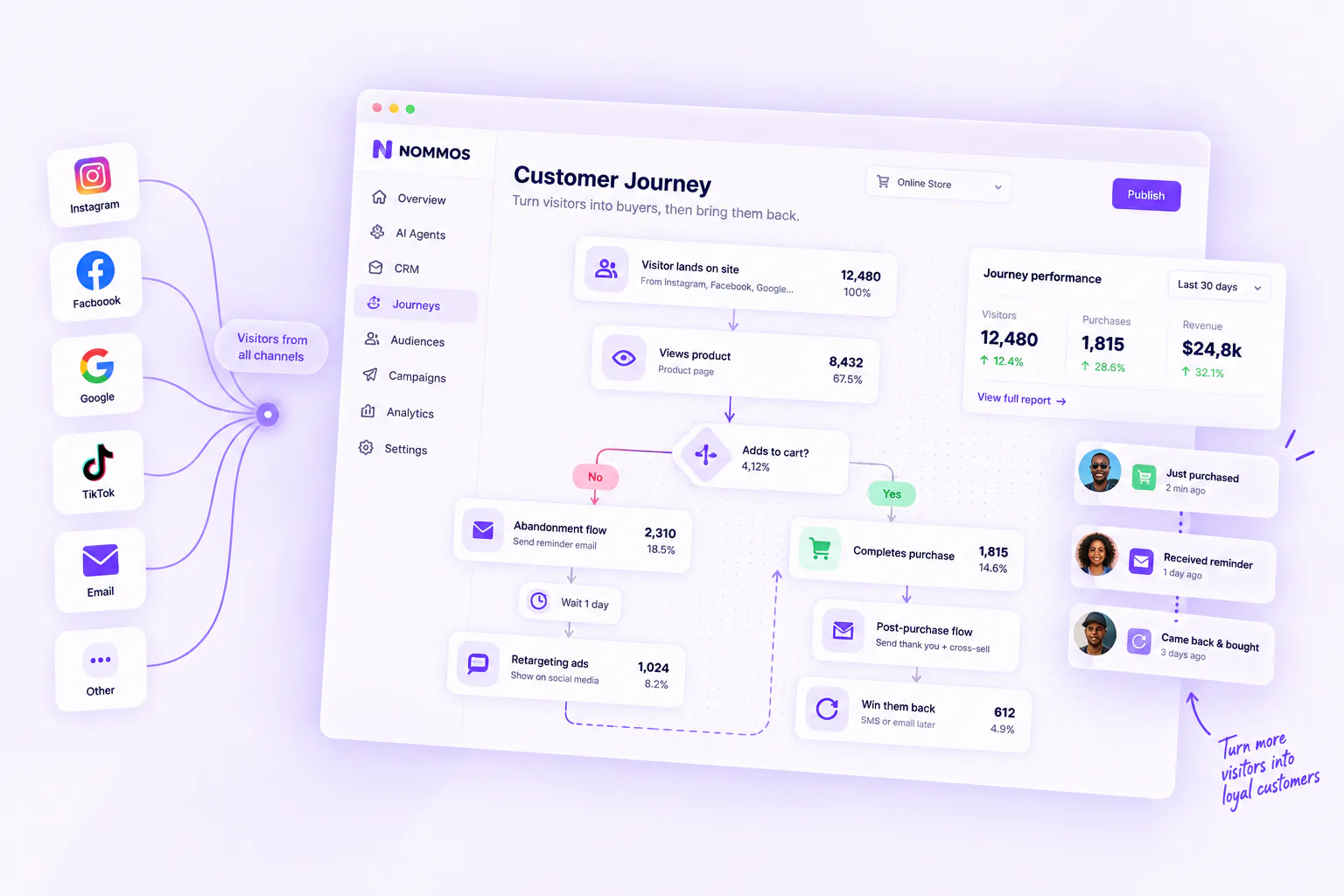
A Nommos journey recovering an abandoned checkout, branching on the customer's preferred channel
The everyday problem

Three things a store usually cannot answer

  • Who abandoned a checkout in the last four hours, and how to reach each of them
  • Which existing customers are drifting away before they actually leave
  • Whether the discount you are about to send is going to people who would have bought anyway
Worked scenarios

Three things you can build in an afternoon

Abandoned checkout, on the right channel

Entry on the started-checkout event with no purchase. Wait four hours. Branch on channel preference — WhatsApp if they are opted in, otherwise email. Set the goal to purchase, so anyone who buys exits immediately and stops receiving the sequence.

Protect margin on people who would buy anyway

Build a segment of high conversion probability with no discount in the last 60 days, and use it as an exclusion on the promotion. The offer goes to the people who need it.

Win back before they are gone

Churn risk is high, previously high customer value, opted in to email. Not “everyone quiet for 30 days” — a model output with visible drivers, and a segment that keeps itself current.

Lifecycle

Your funnel, defined once and enforced

Visitor, first purchase, repeat, at risk, lapsed. Define the stages you actually use, then let rules move people automatically — and dry-run any rule before it touches anyone.

  • Stage actions fire on entry and exit: send a message, tag, enrol in a journey
  • Movement safety stops people skipping stages or moving backwards unintentionally
  • Every stage change records what triggered it
  • Average time in stage becomes a number you can actually improve

Build the cart-recovery journey live

Then we'll test it on a real contact so you can see the branch it takes — without anything being sent.