
Compose with the real constraints
Header, body, footer and buttons are validated against Meta’s limits as you type — 1024 characters of body, 60 of header and footer, 25 per button — so a template is rejected before it is submitted, not after.
Templates you build and submit for approval, conversations that land in the shared inbox, and journeys that message people on the channel they actually read.
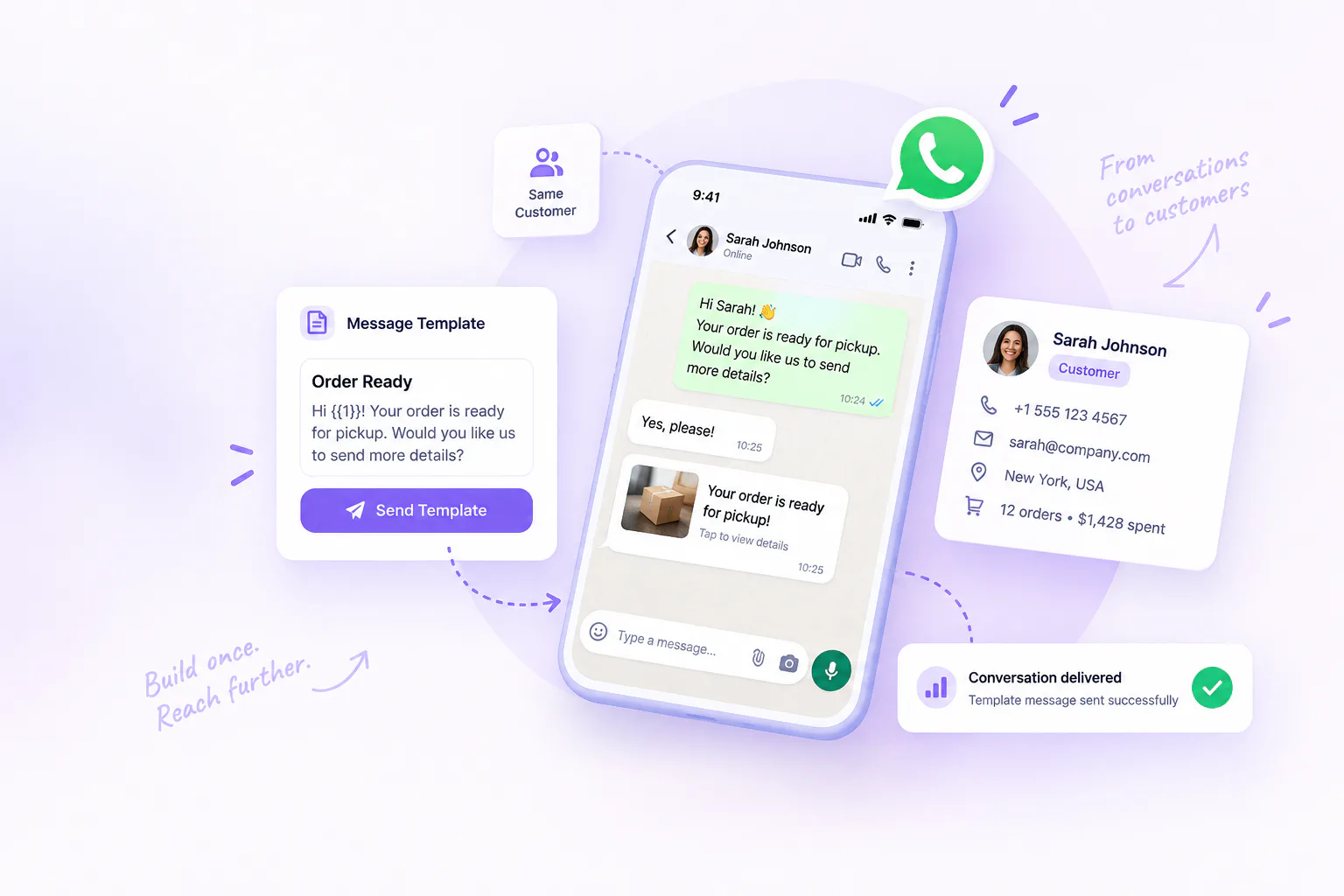
Business-initiated WhatsApp messages have to use a template Meta has approved. That round trip is the part teams dread, so it happens inside the product.
Header, body, footer and buttons are validated against Meta’s limits as you type — 1024 characters of body, 60 of header and footer, 25 per button — so a template is rejected before it is submitted, not after.
Both supported, with the category chosen at submission because it changes how Meta reviews and prices the send. Authentication templates use a different component model and are not supported yet.
Submission, approval and rejection arrive over Meta’s webhook and update the template in place. Nobody has to sit in Business Manager refreshing a list.
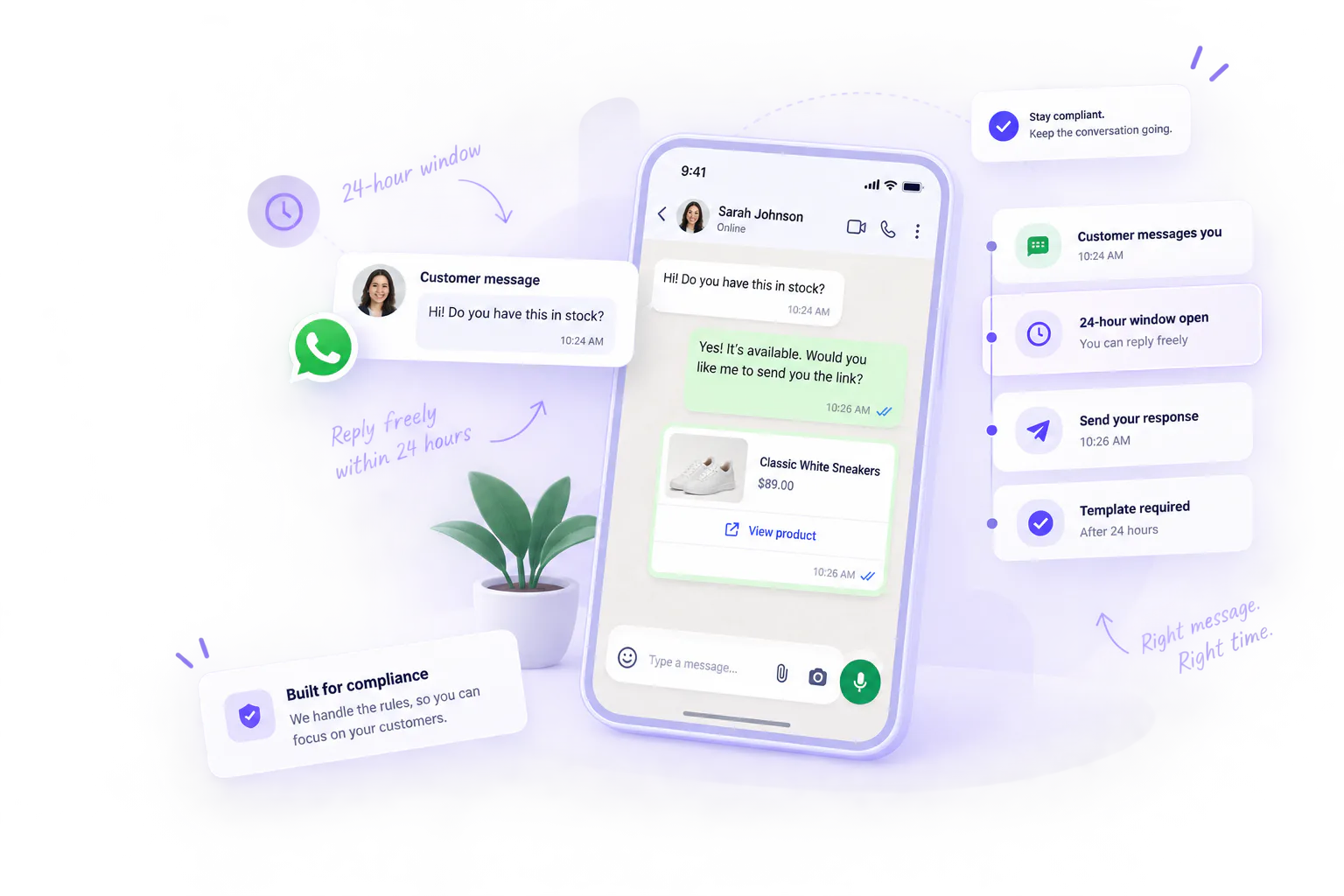
Meta only allows a free-form reply within 24 hours of the customer’s last inbound message. After that, only an approved template may be sent.
It is a channel on the record, not a separate product with its own contact list.
We will show you where the builder would have caught it, and what the same message looks like as a journey step.