
Separate data per brand
Contacts, campaigns, content and analytics never mix between workspaces.
Brand isolation is how the platform is built, not a plan tier. Every brand gets its own separated data, branding, currency, timezone and team — and you move between them without logging out.
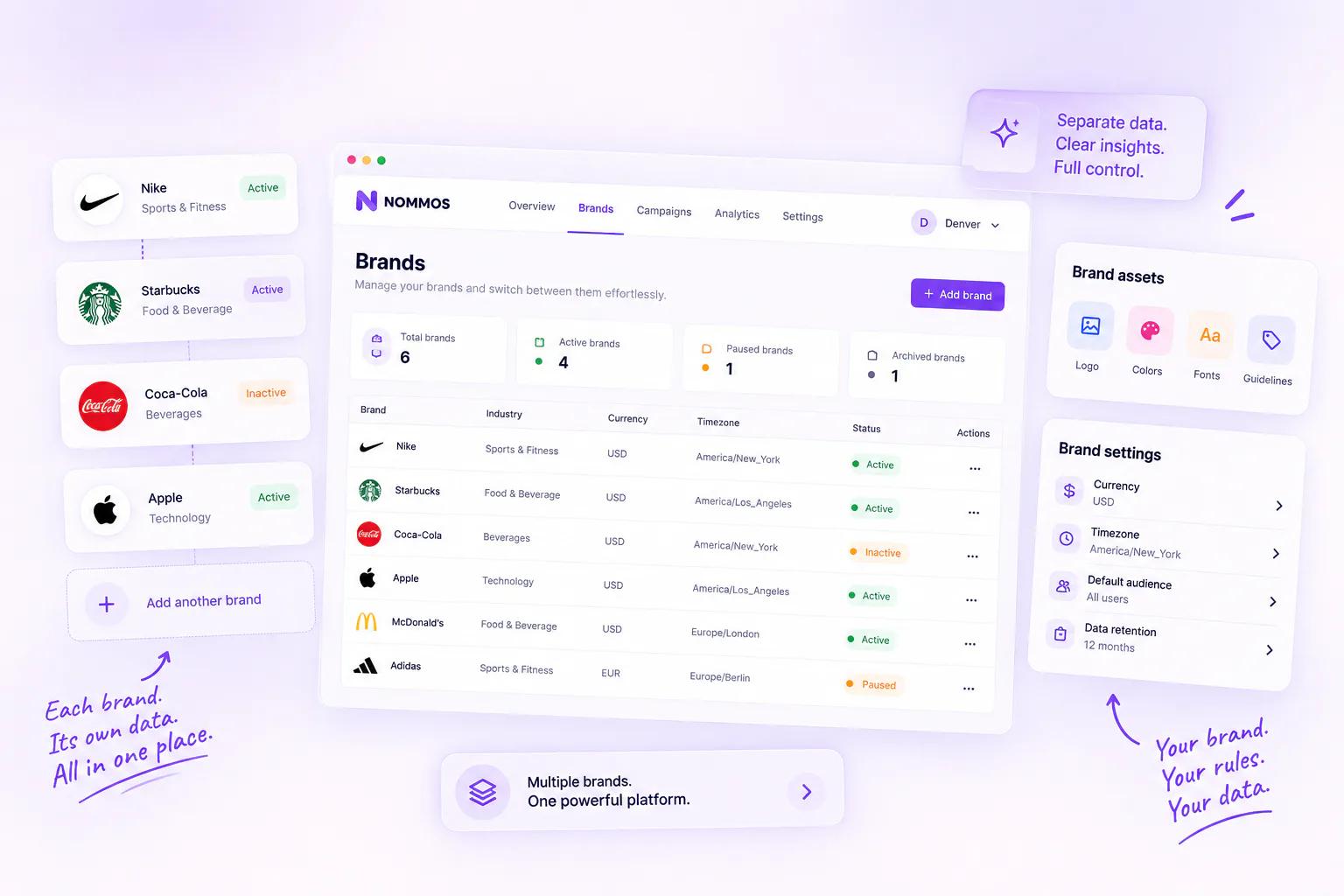
And one more on top: keeping the brands apart.
Per-seat and per-channel pricing makes this worse, because cost scales with the number of brands rather than with the value received.
Each brand is provisioned as its own workspace with its own separated data store. This is the substantive answer when a client asks whether their data can reach another agency client.
Contacts, campaigns, content and analytics never mix between workspaces.
Each brand reports in its own currency. Where several are involved in one figure, the metric splits by platform rather than adding different currencies together.
A contractor on one client cannot see another. Access is removed completely in seconds when an engagement ends.
Not “connected to Facebook” but which page, which Instagram account, which Pinterest board. Posting to the wrong brand stops being a realistic mistake.
Its own branding, currency, timezone and language from the start.
The agents start with content patterns, topics, offer types and calls to action appropriate to that sector rather than from nothing.
Voice, tone, writing style, words to avoid, audience. Every agent reads it before writing anything — nobody pastes brand guidelines into a prompt.
Each connection names its destination, so the account you just linked is unambiguous.
Journey and template patterns that performed for another brand are rebuilt here quickly, because the structure is known.
They see their own results in a view they cannot break.
No export, no reformatting, no separate reporting tool eating the margin. When a client questions a number, you click it and show the breakdown while the question is still being asked.
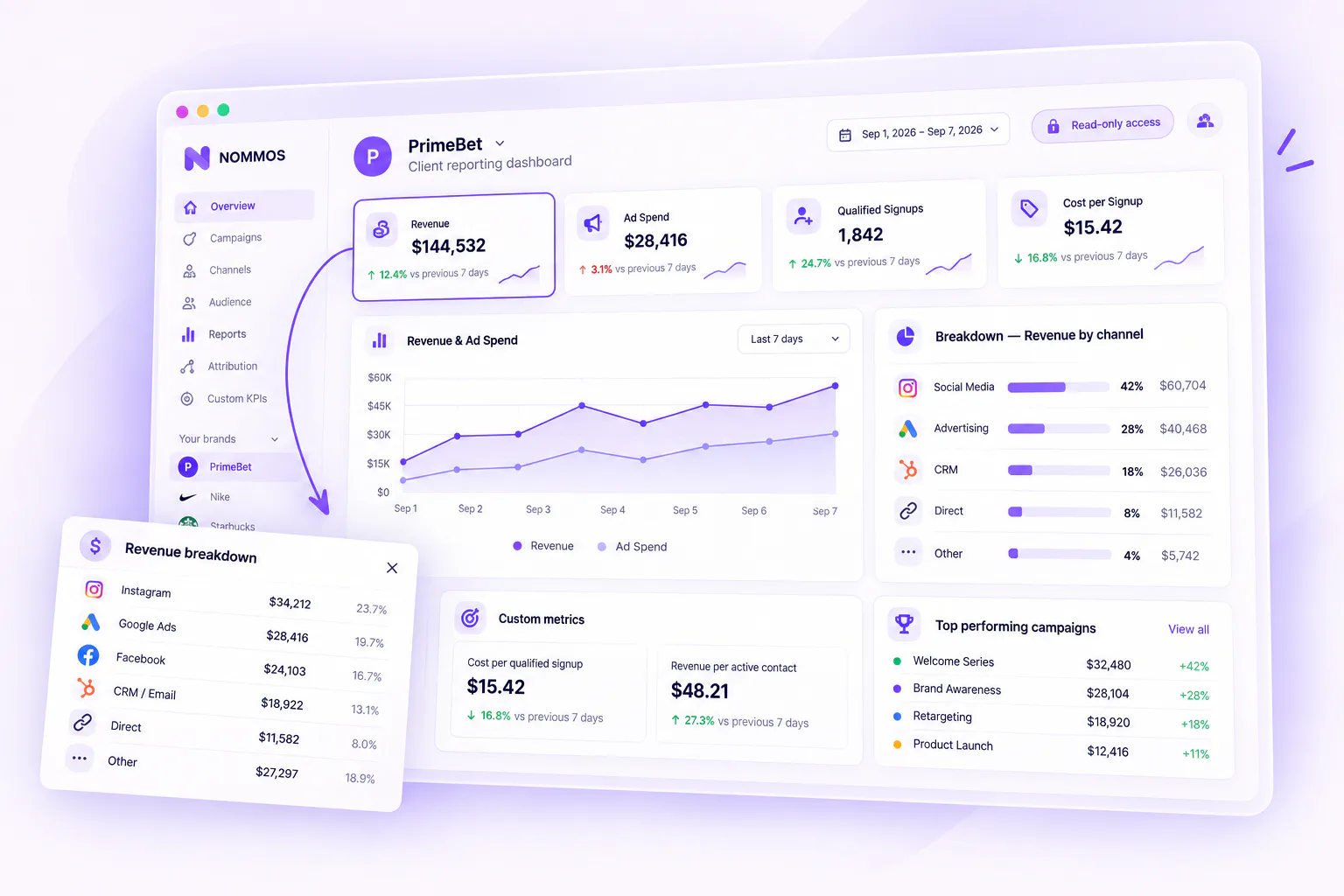
It is the fastest way to see what isolation actually means in practice — and what it means for how you price your own work.